Blind-Spot Collision-Avoidance Assist Malfunction And Limitations
2C_FCADysfunction
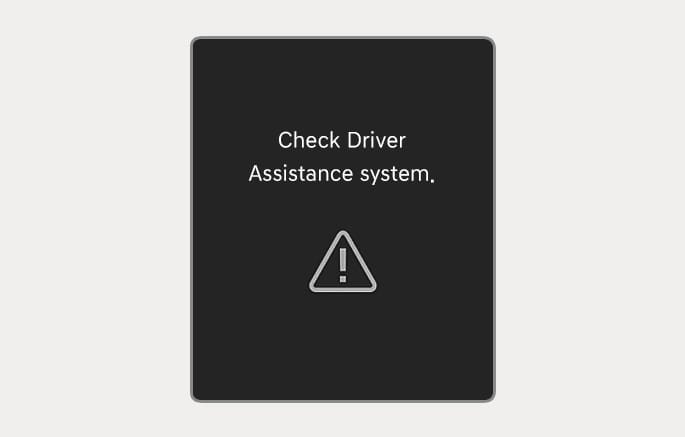
When Blind-Spot Collision-Avoidance Assist is not working properly, the "Check Driver Assistance system" warning message may appear for several seconds, and the
2C_CheckSideViewMirrorWarningLightInfo
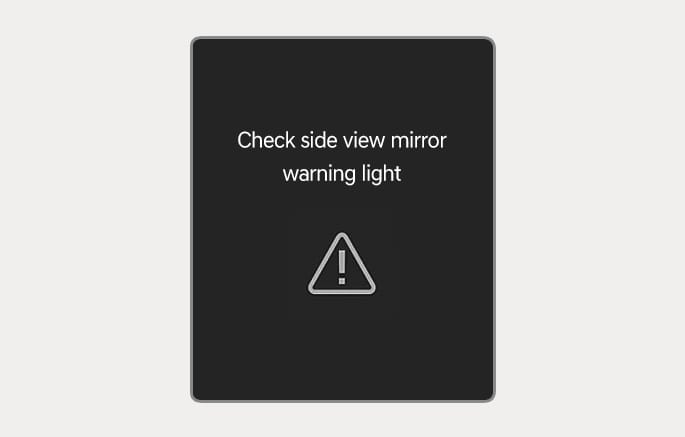
When the side view mirror warning light is not working properly, the "Check side view mirror warning light" warning message may appear for several seconds, and the
2C_SCCDisabledInfo
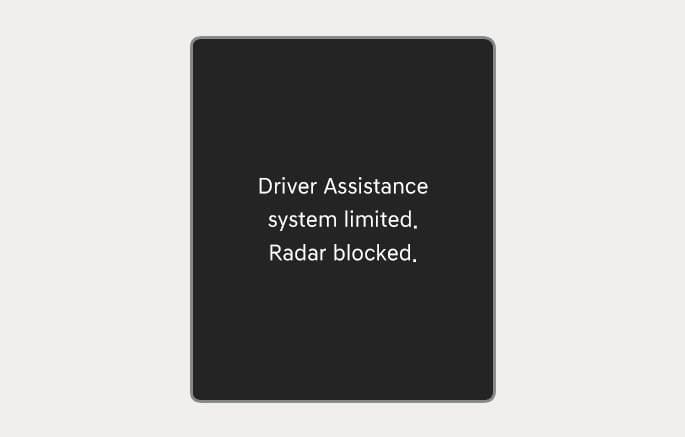
If the rear corner radar is blocked or covered, or when the rear bumper around the rear corner radar or sensor is covered by any foreign material, such as snow, rain, or dirt, or when a trailer or hitch mounted carrier is installed, the detecting performance may reduce and temporarily limit or disable Blind-Spot Collision-Avoidance Assist.
The "Driver Assistance system limited. Radar blocked" warning message may appear on the instrument cluster.
The function operates normally when such foreign material, trailer, or carrier is removed, and the engine is restarted.
If Blind-Spot Collision-Avoidance Assist does not operate normally after anything covering or blocking the sensors is removed, have your vehicle inspected by an authorized retailer of Genesis Branded products.
-
Blind-Spot Collision-Avoidance Assist may not operate properly even if there is no warning message or warning light on the instrument cluster. Blind-Spot Collision-Avoidance Assist may not properly operate.
-
Blind-Spot Collision-Avoidance Assist may not operate properly in open areas where no objects are detected (for example, empty parking lot) or when the detecting sensors are blocked right after turning on the engine.
Detecting senors
Refer to the "Driver Assistance System Sensors" section in this chapter for the location and the general precautions of the rear corner radar.
Blind-Spot Collision-Avoidance Assist may not operate normally or may operate unexpectedly if:
-
There is inclement weather, such as heavy snow, heavy rain, etc.
-
The rear corner radar or the area near the rear corner radar is covered by snow, water, or dirt.
-
The rear corner radar or the area near the rear corner radar is blocked by a vehicle, wall, or pillar.
-
The temperature near the rear corner radar is very hot or cold.
-
You are driving on an entrance/exit ramp or through a tollbooth.
-
The road pavement (or the ground near your vehicle) contains metallic components (i.e. possibly due to subway construction).
-
There is a fixed object near the vehicle, such as sound barriers, guardrails, central dividers, entry barriers, streetlights, signs, tunnels, walls, etc. (including double structures)
-
You are driving on a narrow road where trees or grass are overgrown.
-
You are driving on a narrow road where trees or grass are overgrown.
-
You are driving in large, open areas where there are few vehicles or structures (for example, desert, meadow, empty parking lot).
-
The other vehicle drives very close behind your vehicle, or passes by your vehicle in close proximity.
-
The speed of the other vehicle is so fast that it passes by your vehicle in a short time.
-
Your vehicle passes another vehicle.
-
Your vehicle changes lane.
-
Your vehicle has started at the same time as the vehicle next to you and has accelerated.
-
The vehicle in the next lane moves two lanes away from you, or the vehicle moves two lanes away to the next lane.
-
A trailer or hitch mounted carrier is installed and it blocks the rear corner radar.
-
The area near the rear corner radar is covered with objects, such as bumper sticker, bumper guard, bike rack, etc.
-
The bumper around the rear corner radar has been damaged or modified, and the radar is out of position.
-
Your vehicle height is lower or higher than normal due to heavy loads, abnormal tire pressure, etc.
Blind-Spot Collision-Avoidance Assist may not operate normally or may operate unexpectedly when the following objects are detected:
-
A motorcycle or bicycle.
-
A vehicle such as a flat trailer.
-
A big vehicle such as a bus or truck.
-
A moving obstacle such as a pedestrian, animal, shopping cart, or baby stroller.
-
A vehicle with lower height, such as sports car.
Blind-Spot Collision-Avoidance Assist may not assist braking when:
-
Your vehicle severely vibrates while driving over a bumpy road, uneven road, or concrete patch.
-
You are driving on a slippery surface due to snow, water puddle, ice, etc.
-
The tire pressure is low or a tire is damaged.
-
The braking system is adjusted differently from the factory default settings.
-
Your vehicle makes abrupt lane changes.
-
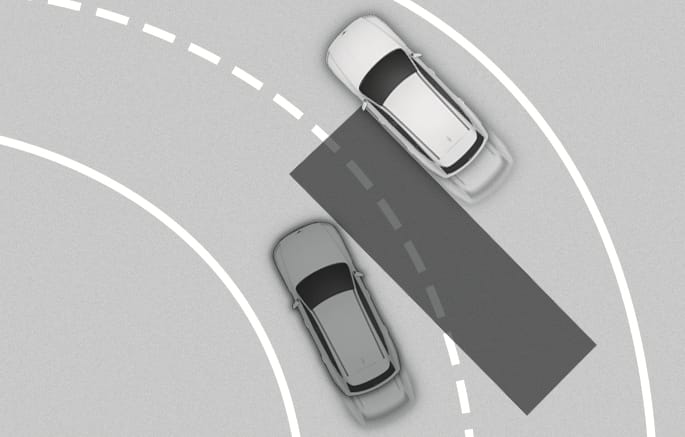
Driving on curves
2C_BCADrivingOnCurveLoad
Blind-Spot Collision-Avoidance Assist may not detect a vehicle in an adjacent lane when driving on curves and may not activate a warning or brake your vehicle.
Always check road conditions, and if necessary, take appropriate actions to drive safely.
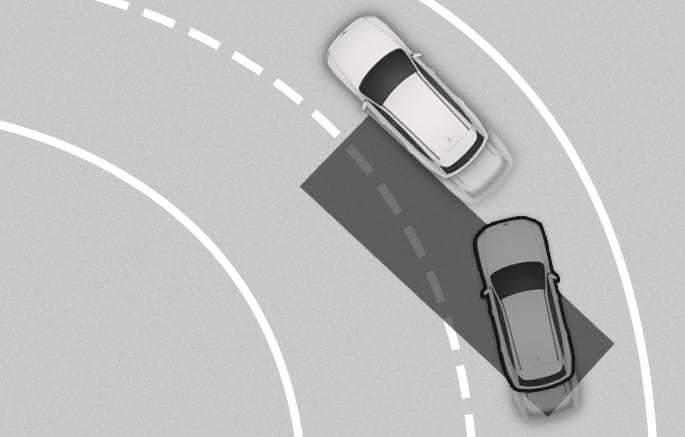
2C_BCADrivingOnCurveLoad_2
Blind-Spot Collision-Avoidance Assist may detect a vehicle in the same lane when driving on curves and activate a warning and brake your vehicle.
Always check road conditions, and if necessary, take appropriate actions to drive safely.
-
Driving on hills
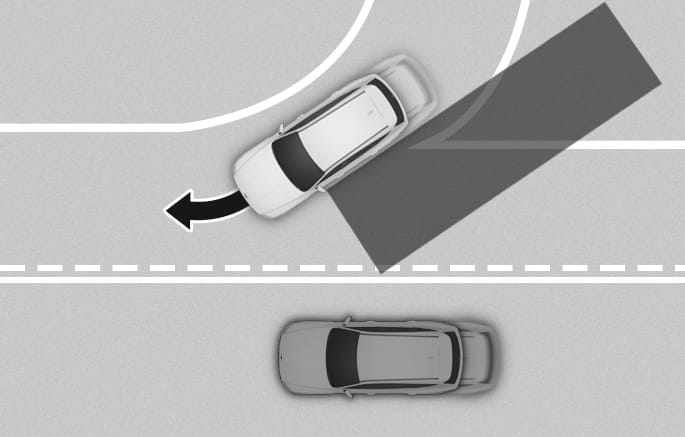
2C_BCADrivingRoadMerging
Blind-Spot Collision-Avoidance Assist may not detect a vehicle in an adjacent lane or may incorrectly detect the ground or another object when driving on hills and activate a warning or brake your vehicle.
Always check road conditions, and if necessary, take appropriate actions to drive safely.
-
Driving where the road is merging/dividing
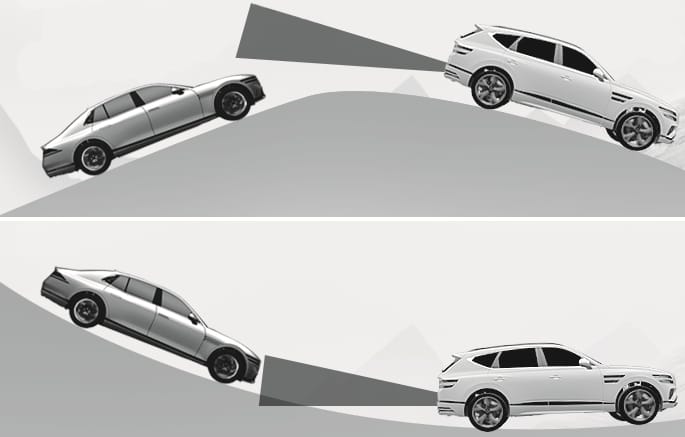
2C_BCADrivingOnInclinedLoad
Blind-Spot Collision-Avoidance Assist may not detect a vehicle in an adjacent lane when the road merges or divides, and may not activate a warning or brake your vehicle.
Always check road conditions, and if necessary, take appropriate actions to drive safely.
-
Driving where the heights of the lanes are different
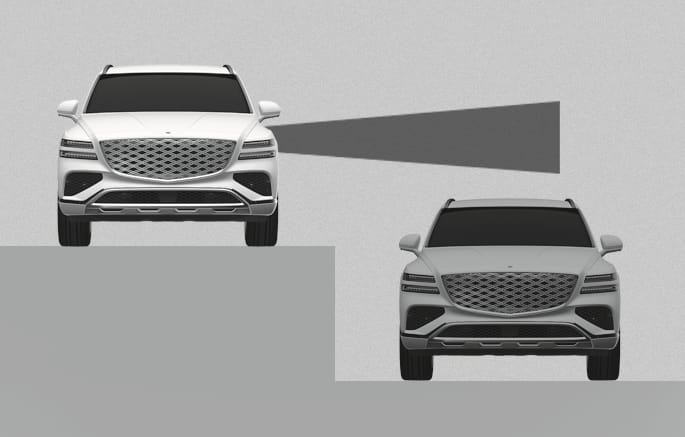
2C_BCADrivingLoadHeightDifferent
Blind-Spot Collision-Avoidance Assist may not operate properly when driving where the heights of the lanes are different. The system may not detect a vehicle on a road with a different lane height (underpass joining section, grade separated intersections, etc.) and not activate a warning or brake your vehicle.
Always check road conditions, and if necessary, take appropriate actions to drive safely.
-
Always turn off Blind-Spot Collision-Avoidance Assist when towing a trailer or using a hitch mounted carrier.
-
Blind-Spot Collision-Avoidance Assist may not operate normally if there is interference from strong electromagnetic waves.
-
Blind-Spot Collision-Avoidance Assist may not operate for 3 seconds right after your vehicle is started or when the rear corner radars are initialized.
This device complies with Part 15 of the FCC rules.
Operation is subject to the following three conditions:
-
This device may not cause harmful interference, and
-
This device must accept any interference received, including interference that may cause undesired operation.
-
Changes or modifications not expressly approved by the party responsible for compliance could void the user's authority to operate the device.
Radio frequency radiation exposure information:
This equipment complies with FCC radiation exposure limits set forth for an uncontrolled environment.
This equipment should be installed and operated with minimum distance of 8 in. (20 cm) between the radiator (antenna) and your body.
This transmitter must not be co-located or operating in conjunction with any other antenna or transmitter.