Blind-Spot Collision-Avoidance Assist operation
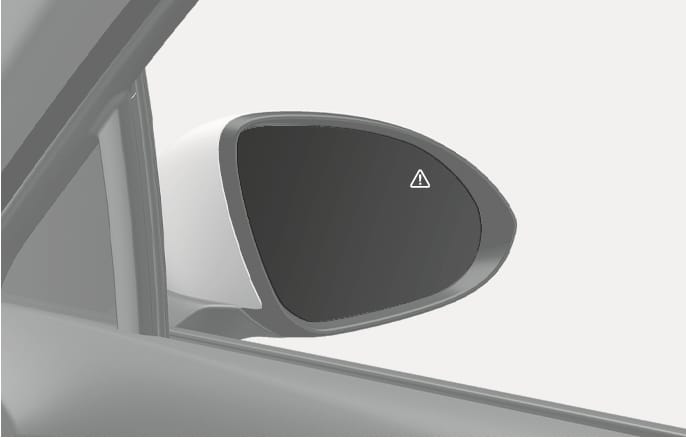
2C_BCAVehicleDetection
When a vehicle is detected in a blind spot, the warning light on the corresponding outside rearview mirror and head-up display (if equipped) may illuminate.
-
Vehicle detection operates when your vehicle speed is above 20 km/h and the speed of the vehicle in the blind spot area is above 10 km/h.
Collision warning may operate when the turn signal is turned on in the direction of a detected vehicle.
-
To warn you of a potential collision, the warning light on the corresponding outside rearview mirror and head-up display (if equipped) may blink, an audible warning may sound, and the steering wheel may vibrate.
-
Collision warning operates when your vehicle speed is above 40 km/h and the speed of the vehicle in the blind spot area is above 10 km/h.
-
When the turn signal is turned off or you move away from the vehicle in the blind spot, the system returns to vehicle detection state.
-
The detecting range of the rear corner radar is determined by a standard road width. On narrow roads, Blind-Spot Collision-Avoidance Assist may detect other vehicles two lanes over and warn you. On wide roads, Blind-Spot Collision-Avoidance Assist may not be able to detect a vehicle driving in the next lane and may not warn you.
-
When the hazard warning flasher is on, the collision warning initiated by activating the turn signal may not operate.
As the driver seat is on the right side, the collision warning may occur when you turn right. Maintain a proper distance from other vehicles when turning.
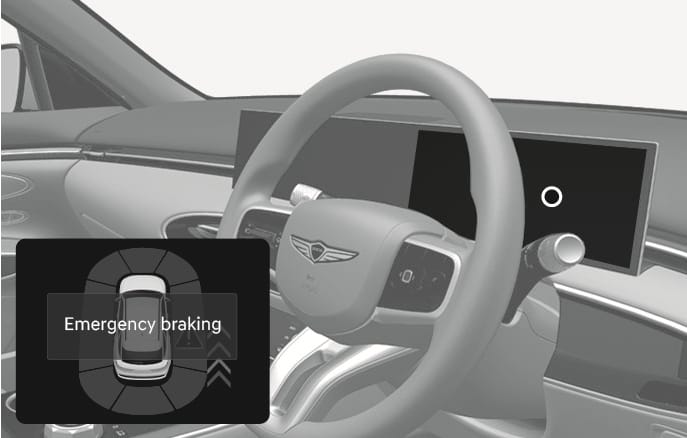
2C_BCABrakingControl
To warn you of a potential collision, the warning light on the corresponding outside rearview mirror and head-up display (if equipped) may blink, a warning message may appear on the instrument cluster, an audible warning may sound, and the steering wheel may vibrate.
-
Collision-Avoidance Assist operates when your vehicle speed is below 3 km/h and the speed of the vehicle in the blind spot area is above 5 km/h.
-
Emergency braking is assisted to help avoid collision with the vehicle in the blind spot area.
After your vehicle is stopped following an Emergency Braking event, the "Drive carefully" warning message appears on the instrument cluster.
Press the brake pedal immediately and check the surroundings.
-
Braking control ends about 2 seconds after your vehicle is stopped following an Emergency Braking event.
Blind-Spot Collision-Avoidance Assist may not operate in all situations and cannot prevent all collisions. To prevent serious injury or death:
-
Only change the settings after parking your vehicle at a safe location.
-
Blind-Spot Collision-Avoidance Assist may not operate if the function determines you have pressed the brake pedal sufficiently in response to the potential hazard detected by the function.
-
If Blind-Spot Collision-Avoidance Assist is assisting to brake your vehicle and you excessively press the accelerator pedal or sharply steer your vehicle, it stops assisted braking.
-
During Blind-Spot Collision-Avoidance Assist operation, your vehicle may stop suddenly. Always wear your seat belt, check your passengers have their seat belts fastened and secure loose objects that may become projectiles.
-
Even if there is a problem with Blind-Spot Collision-Avoidance Assist, your vehicle's braking system operates normally.
-
Blind-Spot Collision-Avoidance Assist may warn you or may not warn you depending on the road and driving conditions.
-
Control your vehicle at all times. Always maintain a safe distance from the vehicles ahead and adjust your vehicle speed depending on the road conditions. press the brake pedal to reduce driving speed or to stop the vehicle.
-
Never attempt to test Blind-Spot Collision-Avoidance Assist by intentionally driving toward people, animals, objects, or other vehicles.
-
When other system's warning message appears or audible warning is heard, Blind-Spot Collision-Avoidance Assist may not warn you.
-
You may not hear the audible warning of Blind-Spot Collision-Avoidance Assist if the surrounding environment is too noisy.
Braking is not assisted and only a warning is provided when:
-
The ESC (Electronic Stability Control) warning light is on.
-
ESC (Electronic Stability Control) is engaged in a different function.