Checking the coolant level
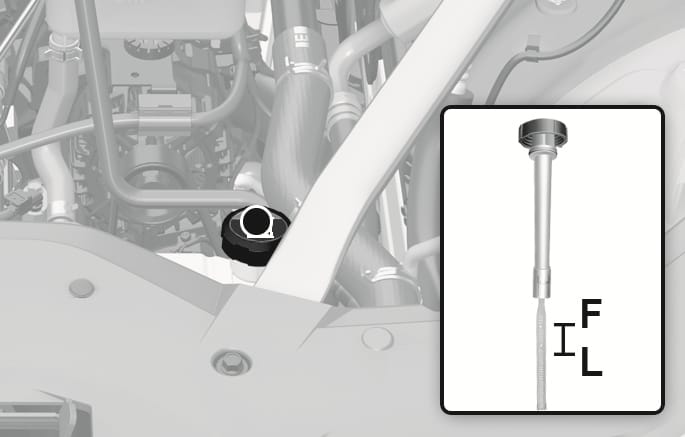
OIK093141
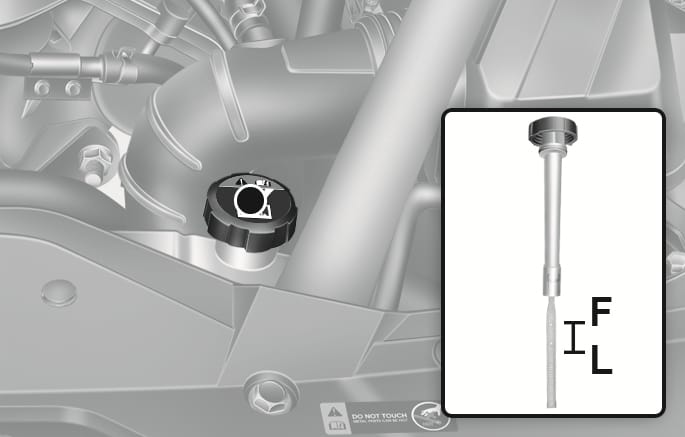
OIK093007
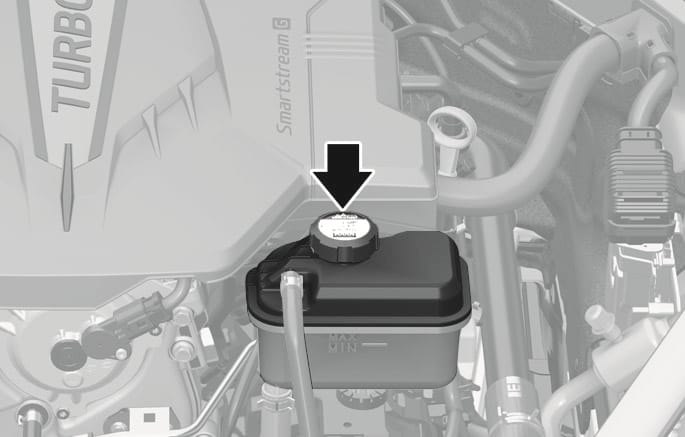
OIK093142
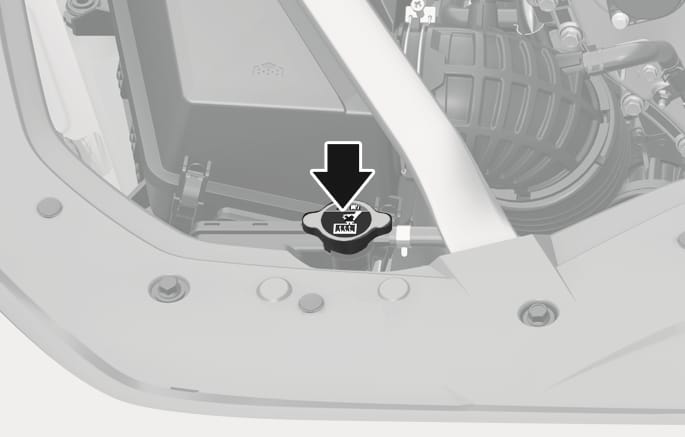
OIK093008
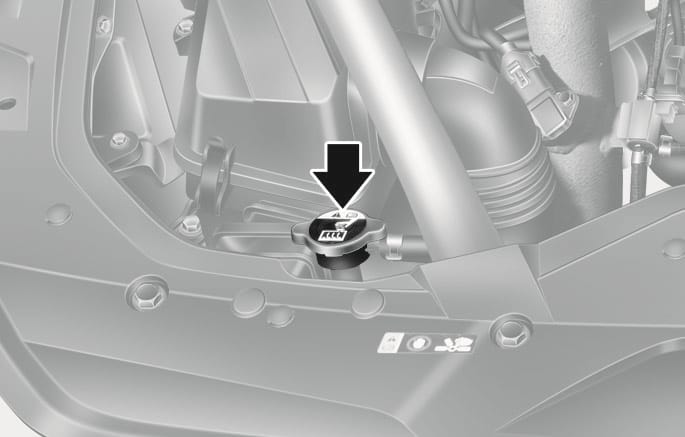
OIK093276N
Check the condition and connections of all cooling system hoses and heater hoses. Replace any swollen or deteriorated hoses.
The coolant level should be filled between the MAX and the MIN marks on the side of the coolant reservoir when the engine is cool.
If the coolant level is low, add enough distilled (deionized) water to bring the level to the MAX mark, but do not overfill. If frequent additions are required, see an authorized retailer of Genesis Branded products for a cooling system inspection.
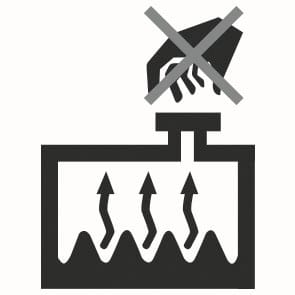
Never remove the engine coolant cap, radiator cap and/or liquid-cooled intercooler coolant cap or the drain plug while the engine coolant cap, radiator cap and liquid-cooled intercooler coolant cap are hot. Hot coolant and steam may blow out under pressure, causing serious injury.
Turn the vehicle off and wait until the engine cools down. Use extreme care when removing the radiator cap, coolant cap. Wrap a thick towel around it, and turn it counterclockwise slowly to the first stop. Step back while the pressure is released from the cooling system. When you are sure all the pressure has been released, press down on the cap, using a thick towel, and continue turning counterclockwise to remove it.
The coolant level is influenced by the engine temperature. Before checking or refilling the coolant, turn the engine off.
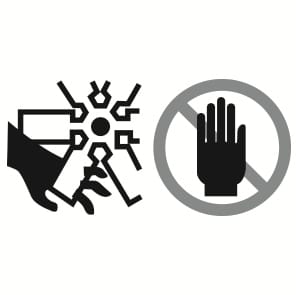
The electric motor for the cooling fan may continue to operate or start up when the engine is not running and can cause serious injury. Keep hands, clothing and tools away from the rotating fan blades of the cooling fan.
Always turn off the vehicle unless the vehicle has to be inspected with the engine on. Be cautious as the cooling fan may operate if the negative (-) battery terminal is not disconnected.
Make sure the coolant cap is properly closed after refilling coolant. Otherwise the engine could be overheated while driving.
-
Check if the coolant cap label is straight in front.
Engine compartment front view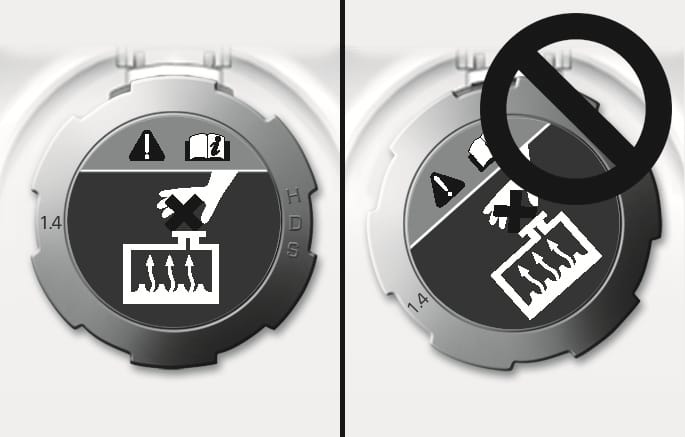
OIK093139
Liquid-cooled intercooler coolant front view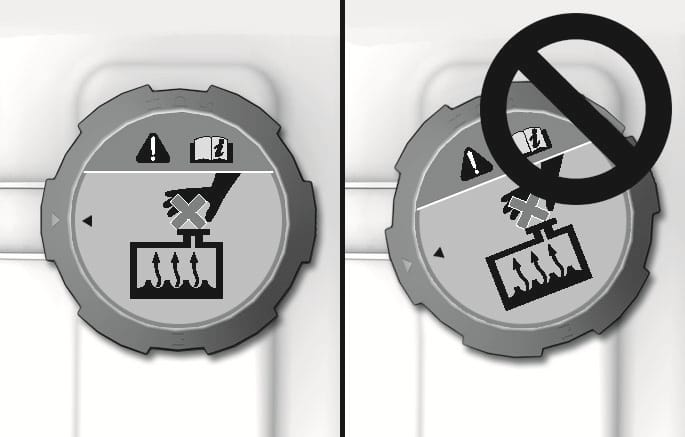
OIK093138
-
Make sure that the tiny protrusions inside the coolant cap are securely interlocked.
Engine compartment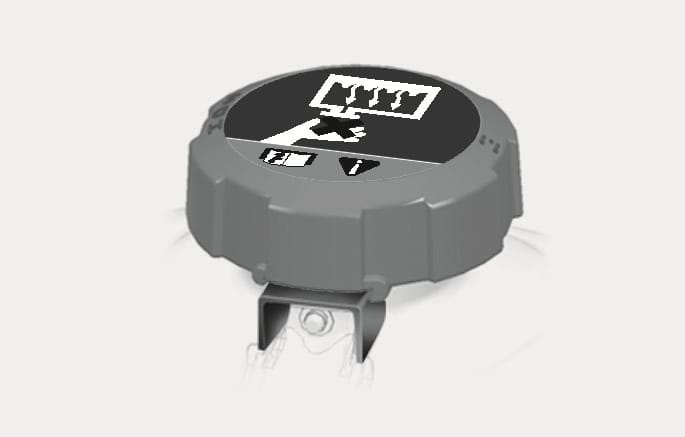
OIK093144
Liquid-cooled intercooler coolant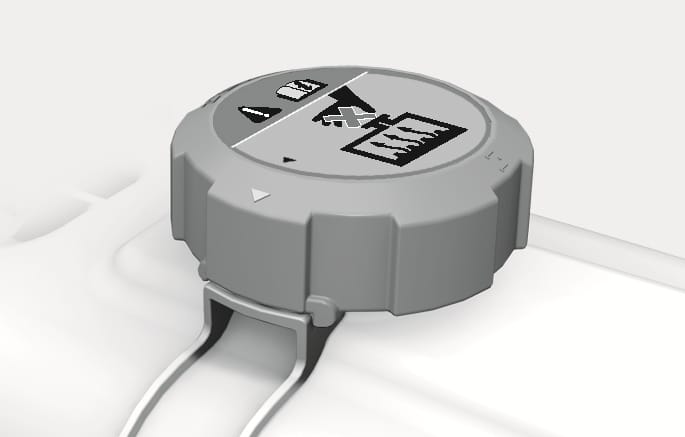
2C_CheckCoolantCapLocked_2
-
When adding coolant, use only deionized water, distilled water or soft water for your vehicle and never mix hard water in the coolant filled at the factory.
-
An incorrect coolant mixture can result in severe malfunction or engine damage.
-
The engine in your vehicle has aluminum engine parts and must be protected by an phosphate-based ethylene glycol coolant to prevent corrosion and freezing.
-
Do not use alcohol or methanol coolant or mix them with the specified coolant.
-
Do not use a solution that contains more than 60 % antifreeze or less than 35 % antifreeze, which would reduce the effectiveness of the solution.
For mixing percentage, refer to the following table:
|
Ambient Temperature |
Mixture Percentage (volume) |
|
|
Antifreeze |
Water |
|
|
5 °F (-15 °C) |
35 |
65 |
|
-13 °F (-25 °C) |
40 |
60 |
|
-31 °F (-35 °C) |
50 |
50 |
|
-49 °F (-45 °C) |
60 |
40 |
If in doubt about the mix ratio, a 50 % water and 50 % antifreeze mix is the easiest to mix together as it will be the same quantity of each. It is suitable to use for most temperature ranges of -31 °F (-35 °C) and higher.